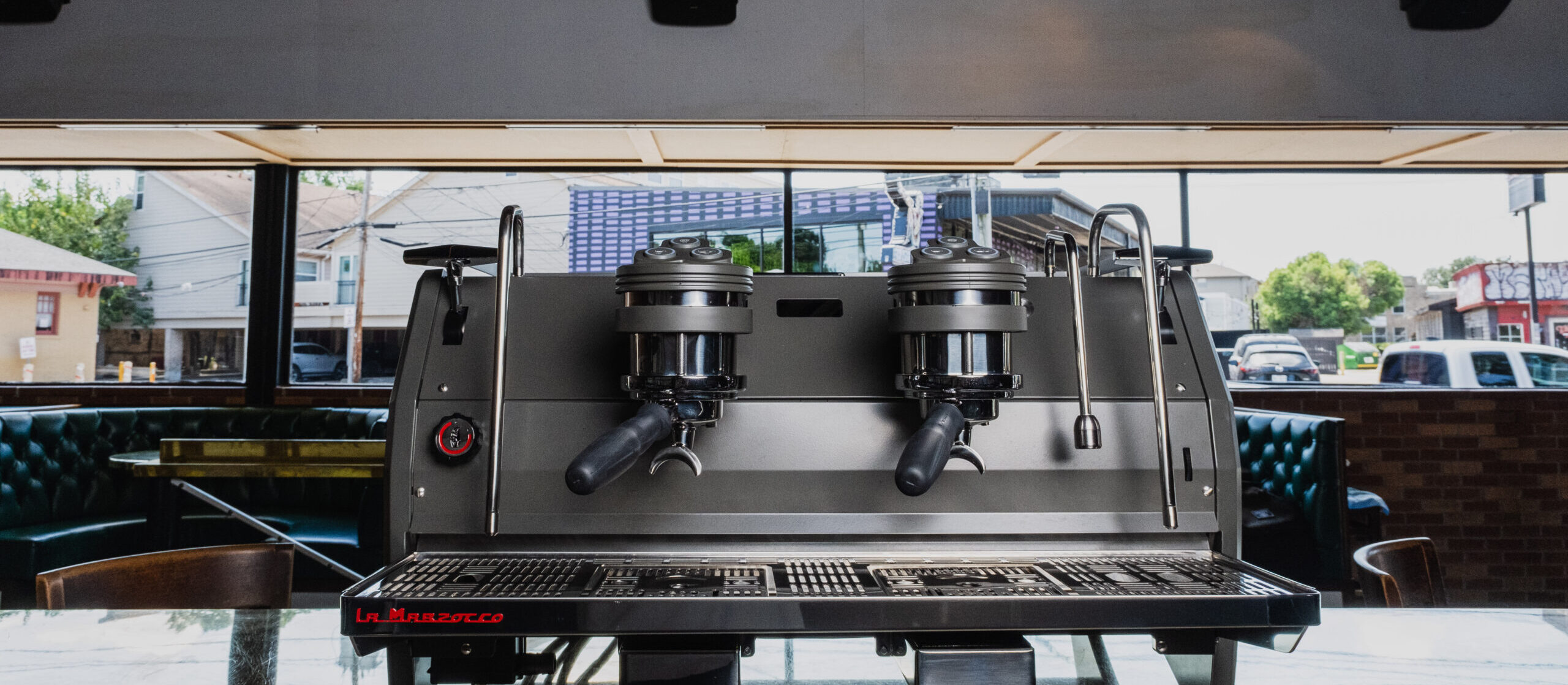
From the Street Team to the Second Generation
“The Strada S takes everything people love about the PB – its proven reliability and consistency – and merges it with the unmistakable design language of the Strada. Legacy, style, and reliability in one package.”
Enrico Wurm, Technical Product Manager
The original Strada was born over the course of two years, during which we had the privilege of working with thirty of the world’s finest coffee professionals to co-design an espresso machine. This group became known as the “Street Team,” and the Strada – Italian for “street” – was named in their honour. Many of them had visited the factory in Scarperia and were involved in this world through competitions, fairs, and the broader third-wave community. WBC champions and other prominent third-wave professionals were invited to a private online forum and encouraged to discuss what the “dream machine” for a third-wave barista could be, to help them in their search for the God in a Cup. Their input helped shape the machine’s features and its distinctive design, which deliberately broke away from the more classic espresso machine aesthetic of earlier La Marzocco models. The Strada was made from a die-cast frame, powder-coated and refined to perfection.
One of the desires emerging from these discussions was to have deeper control over extraction variables – not only temperature and dose, but also pressure control closer to that of a lever machine. Active, gear-pump-driven pressure profiling was born. Inspired by the pressure curve of lever machines, gradually ramping up and down, it offered a unique extraction approach compared to standard pump machines, which typically hold a flat 9-bar profile. In the end, when the Strada was released, it helped to cement our identity within the specialty coffee community.

Elbgold Kaffee, Hamburg, Germany
The Strada platform expanded over time, with the Strada EP providing the advanced pressure control born from the innovations of the original design, and the Strada AV, which provided baristas with the familiar auto-volumetric dosing and static pump pressure found in other La Marzocco machines, combined with the barista-centric features like a low profile and an expansive working area that are inherent to the Strada design.
The Strada S represents the second generation of the Strada AV, keeping the most popular characteristics of the earlier versions, along with independent saturated boilers, cool-touch steam wands, and more. The aim was to improve its capabilities and modernize its design while maintaining the original philosophy, both functional and design-wise.
An icon modernized
“Working on the design of an icon like the Strada was a bit like working on a precious painting, the goal wasn’t to completely overturn the design, but to refine its details, improve it when possible, and modernize its finish, while keeping its recognizable curve untouched.”
Stefano Della Pietra, Product Design & Innovation Manager
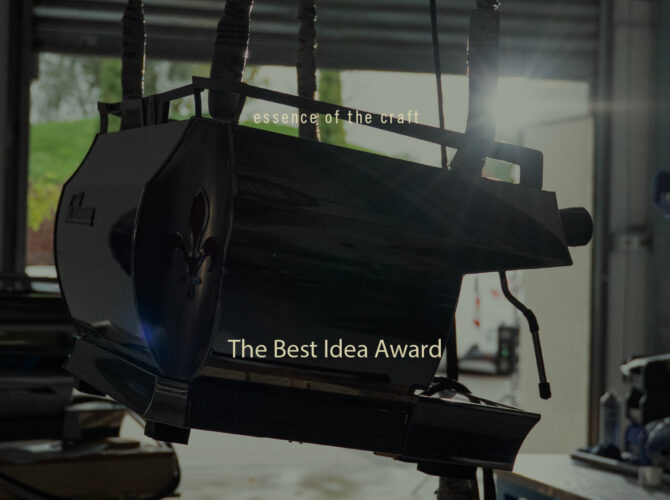
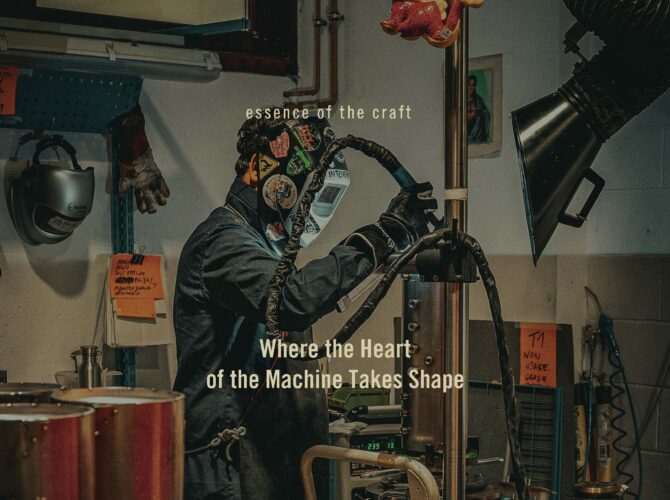
The Strada has always occupied a special place in our design history: not simply as a flagship espresso machine, but as a statement about what we believe specialty coffee should look like, feel like, and represent on a counter. Design-wise, the aluminium side panels of the Strada were not merely decorative – they were part of the load-bearing architecture of the machine. Rather than hiding its internal frame, the structure is expressed through its exterior. In 2020, as Officine Fratelli Bambi was experimenting with new, innovative designs, it originally created what would then become the Strada S as a personalized version of the Strada. While initially the shape was to be completely different, it was ultimately decided to keep the main shape of the machine, that was used as a starting point and highlighted.
When you refine the design of a machine that has become iconic, you’re dealing with a shape that people recognize instantly – and in the world of specialty coffee, that connection is emotional as much as it is visual. The design work became more about details, clean transitions, and modernizing its presence on the counter. Separating the visual language of the side panels and the cup tray made the new Strada still recognizable while shifting its proportions forward and making it feel more dynamic overall. The main body now feels more intentional and solid, while the upper rear area becomes lighter without changing the machine’s actual height. The Strada was already designed to be low and sleek, and the Strada S maintains those proportions, changing the perception of customers who see it on the counter: the new Strada feels more streamlined, more modern, and more visually balanced.

Palace Coffee, Melbourne, Australia
The Officine Fratelli Bambi team also decided to reduce the visual impact of the cup tray, making it subtler and lighter, a detail that would change how the machine sat in its environment and how it looked from a distance. The Strada S closes off the underside more than before, making heat management more complex. This forced the team to redo studies and evaluations established for the previous Strada to optimize its thermal behaviour and stability.
The Strada S embodies a wider philosophy: a beautiful machine is meant to attract people closer and into the café, but functionality is what keeps the machine on the counter in the long run. For this reason, its internals are part of the design. Its transparent panels allow people to see inside, continuing the tradition from the 2009’s Strada EP, and on certain GS models. The message is the same: its internal engineering is part of its identity.
The hidden engineering benefits of design
“The Strada is the machine that sealed La Marzocco’s bond with the specialty coffee niche, because through Strada the barista could truly take control of every parameter.”
Camilla Catarzi, Company Biographer
Design choices sometimes can result in unforeseen improvements in the overall engineering. The exposed group design, aside from being visually striking, led to the incorporation of a pre-heater system, ensuring that water entering the coffee boiler is already at a higher temperature and compensating for the drop caused by the environment’s air temperature around the group heads. The boiler’s shape also plays a part in the thermal stability. This shape comes from the GS3: during development, the team realized that, thermally, the GS3 boiler performed exceptionally well – even better than expected. Traditionally, the water is pulled from the top of the group. But in the GS3, because of having to hide the external tubing, a different choice was made: instead of taking water from the upper section, they drew it from the neck of the group. Since hot water rises and cooler water settles to the bottom, if you extract water from either extreme, you risk greater temperature fluctuations. But in the middle, where temperatures balance out, stability is at its peak, and there’s equilibrium. A design decision led to a measurable improvement in performance.

Patricia Coffee Brewers, Melbourne, Australia
The original Strada also had a wider cup tray and long steam wands, which improved ergonomics and gave baristas more freedom of movement, features that were kept in the new design. The engineering behind the Strada S revolves around its independent saturated boilers: each group head has its own saturated boiler, allowing baristas to set the optimal temperature for each group head, accurate down to 0.1 C°. Another feature of the Strada S is the proportional steam valve and the Pro Touch technology used in the steam wand. The Pro Touch technology results in steam wands that remain cool to the touch even after prolonged use, helping baristas easily and consistently create perfectly textured milk while preventing accidental burns and improving cleanability by reducing milk residue buildup on the cooler exterior surface. The Strada S is available as a 2 or 3-group machine in AV or ABR configurations. The AV configuration focuses on programmable repeatability. The auto-volumetrics ensure consistency in high-volume environments, for cafes seeking a balance of precision and speed. It also features an adjustable drip tray that fits typical ceramic cups, but can also be lowered to accommodate dispensing directly into tall take-away cups. The ABR configuration, with scales built directly into the drip tray, delivers absolute precision in the espresso dose, ensuring perfection in every shot. Both Strada S configurations are also compatible with the La Marzocco mobile app, thanks to the integrated antenna that provides wireless connectivity. Form meets function.