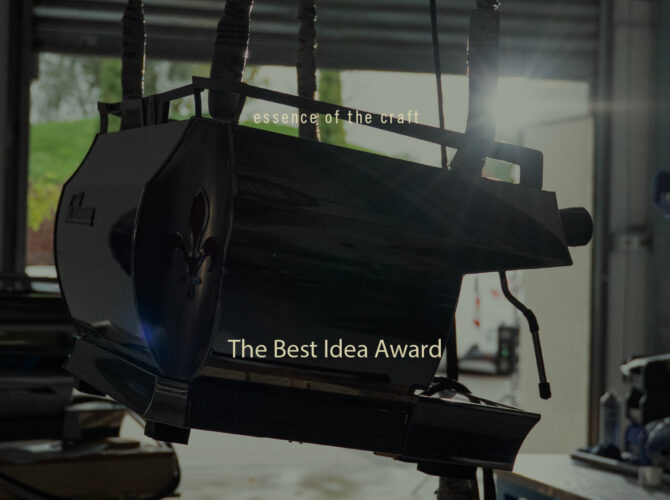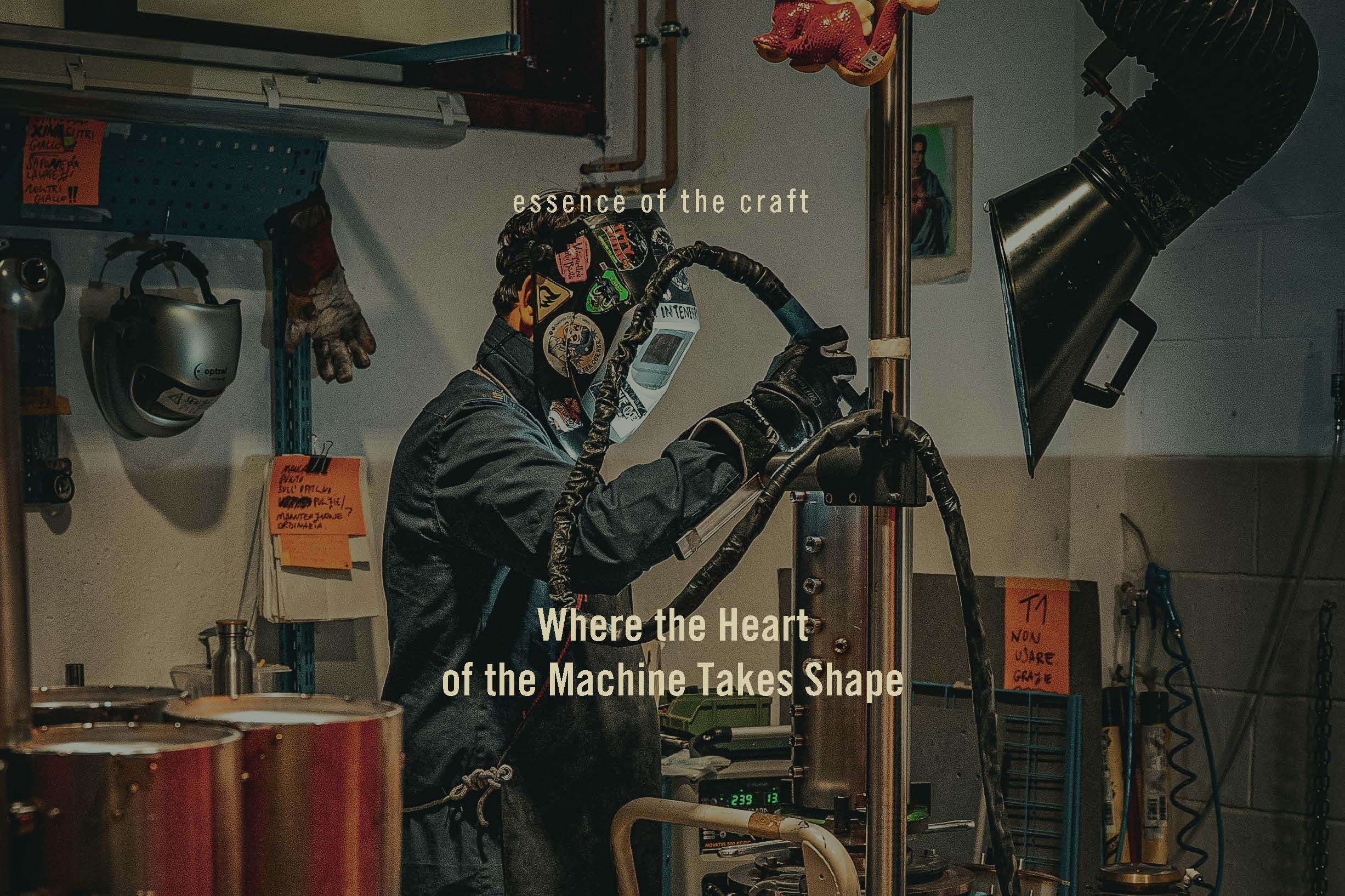

Essence of Craft is a journey into the making of La Marzocco, a visual and narrative exploration of the craft of our espresso machines, the precision, and the human presence behind each step.
Human Touch, the first capsule in the series, explores the artisans whose hands shape every machine—from preparation to assembly—revealing the rhythm, responsibility, and pride behind each step. This first article takes us inside the workshop and welding department, where the steam boilers, the heart of the machine, begin to take shape.
Where the Heart of the Machine Takes Shape
La Marzocco’s dramatic growth in espresso machine production has required a fundamental shift in how work is organized, very different from the days when the company was still a family-run operation in the small factory at Pian di San Bartolo. In the late 1980s, fewer than 500 espresso machines were produced each year, each one crafted by hand on long wooden workbenches.
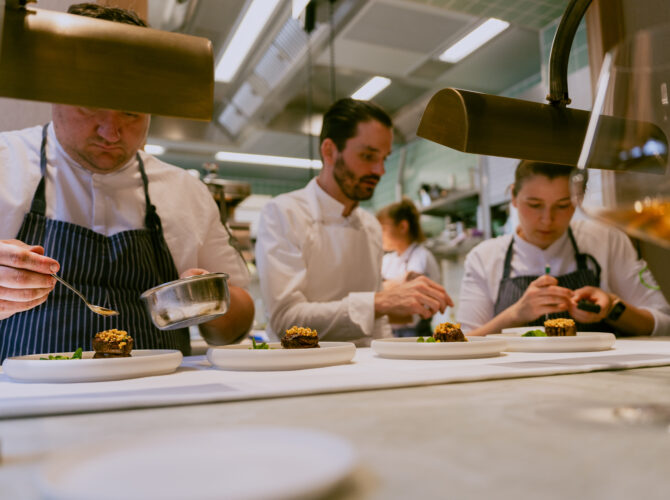
Today, production takes place in large, bright spaces filled with plants and communal areas. Every stage of assembly is monitored by an integrated system called Smart Factory, which tracks each machine from start to finish, ensuring strict procedures are followed to guarantee the highest quality and bridging the gap between artisanship and technology.
Nevertheless, despite the modern, high-tech environment, the spirit of craftsmanship remains unmistakable, the dedication to detail that’s typical of true craftsmanship. In some departments, it’s even more evident than before.
A La Marzocco machine begins to take shape around its two separate boilers, prepared in the workshop and welding department. Here, a team of 14 people, working across two shifts, is dedicated exclusively to preparing and welding the stainless-steel steam and coffee boilers that define La Marzocco’s historic innovation. Just ten years ago, this entire department consisted of only two people, who gradually trained every newcomer.
Work is organized on a weekly basis, with the two shifts running in parallel. Care and respect for the space and the equipment are essential to the point that the metal workshop equipment is given its own name in that spirit. This is a shared environment where each operation is tightly connected to the next.
Each boiler is made from scratch, starting with a steel tube of the right thickness and diameter for the espresso machine model being built. Apart from a set protocol inspection, the material is also carefully inspected by all five senses: close observation and touch. The artisans’ experience ensures there’s no rust or defects.
The stainless steel tube is then cut and prepared for welding, which occurs only after a wash that ensures perfectly clean metal. Any dirt or grease would compromise the weld, and that flaw would mean the boiler has to be scrapped.
Hand welding demands total concentration. Every weld is made point by point, with absolute precision. It’s physically demanding work that consumes a great deal of energy, leaving no room for distraction. Proper safety equipment, protective clothing, and a suction system are essential. On average, at least three people work on each boiler, and the welding process alone takes a minimum of one hour.

Once welded, the boiler is washed again and fitted with a laser-etched nameplate area. A serial number corresponding to the espresso machine is later manually laser-engraved.
No single step is more important than the others, and everyone on the team knows that their work will affect the next phase. This creates a strong sense of individual responsibility, because making a mistake doesn’t just mean scrapping one part, it means wasting all the hours of work put in by everyone who handled it before.
Time is the most valuable resource, and it’s through time that experience grows, along with the ability to solve problems quickly and effectively. Optimizing time and keeping the right rhythm are essential throughout the day, because finishing one step triggers the next. As the operators like to say, it’s all like performing a piece of music: everyone has to play together to create harmony and reach perfection.
If every process matters, one thing is absolutely essential: communication. Over time, a strong team spirit develops, pushing everyone to stay alert to anything that might slow the group down—a machine malfunction, missing material. Those preparing the parts are responsible for feeding the welding process, which in turn sends the finished boilers back to the workshop to be washed and delivered to the frame department.
It’s a large choreography, a continuous flow whose smooth movement depends on every person in the workshop, regardless of their role. Learning the timing of each phase helps everyone adjust, monitor, and step in when needed. Often this happens simply by listening to the sounds of the machines, touching the parts, or taking a quick look around. The welding extractor, the cutting saw, and the industrial washer have become a familiar soundtrack. Even a slightly different noise signals something is wrong and calls for a check.

Their satisfaction and pride come through in the stories they tell and, in their eagerness, to explain the complexity and importance of their work, things that an untrained eye might easily miss. They’re quick to point out that the maximum allowed error is just three-tenths of a millimeter. Even though many of them have done similar work elsewhere, they say they’ve never followed procedures this precise before, but for the product they’re creating, there’s simply no other way. Something as small as wearing the wrong pair of gloves can contaminate parts that have already been washed.
Their work is the legacy of years of La Marzocco experience, passed down by those who worked before them or who have been there longer, and who knew how to share their knowledge.
“We’re a bit privileged by what’s been passed on to us. But as materials, suppliers, and equipment change, we also have to keep updating the way we work. And then we’ll pass that on in turn.”
The workshop and welding departments are among those still most closely tied to craftsmanship and hands-on skill, places where each piece is picked up and worked on many times. One of the most important components, the heart of the espresso machine, takes shape thanks to a focused, well-prepared team. Every new week begins with empty shelves and a different plan, but always the same goal: to maintain high-quality standards while meeting deadlines, and to end the week with the satisfaction of shelves filled with parts ready for production, parts that will become espresso machines shipped all over the world. Espresso machines that carry a heart born from their hands in the workshop.
Follow the journey of #essenceofthecraft on @lamarzocco